Pilot program
Ten doors. One wing. One drill. Then decide.
A ClassLock pilot makes ten classrooms safe harbors in a matter of days, using your own door contractor. Your first lockdown drill produces a door‑by‑door report you can put in front of your board, your insurer and your families. Everything below is the whole offer; there is nothing else to negotiate.
The offer
What a pilot includes
What you get
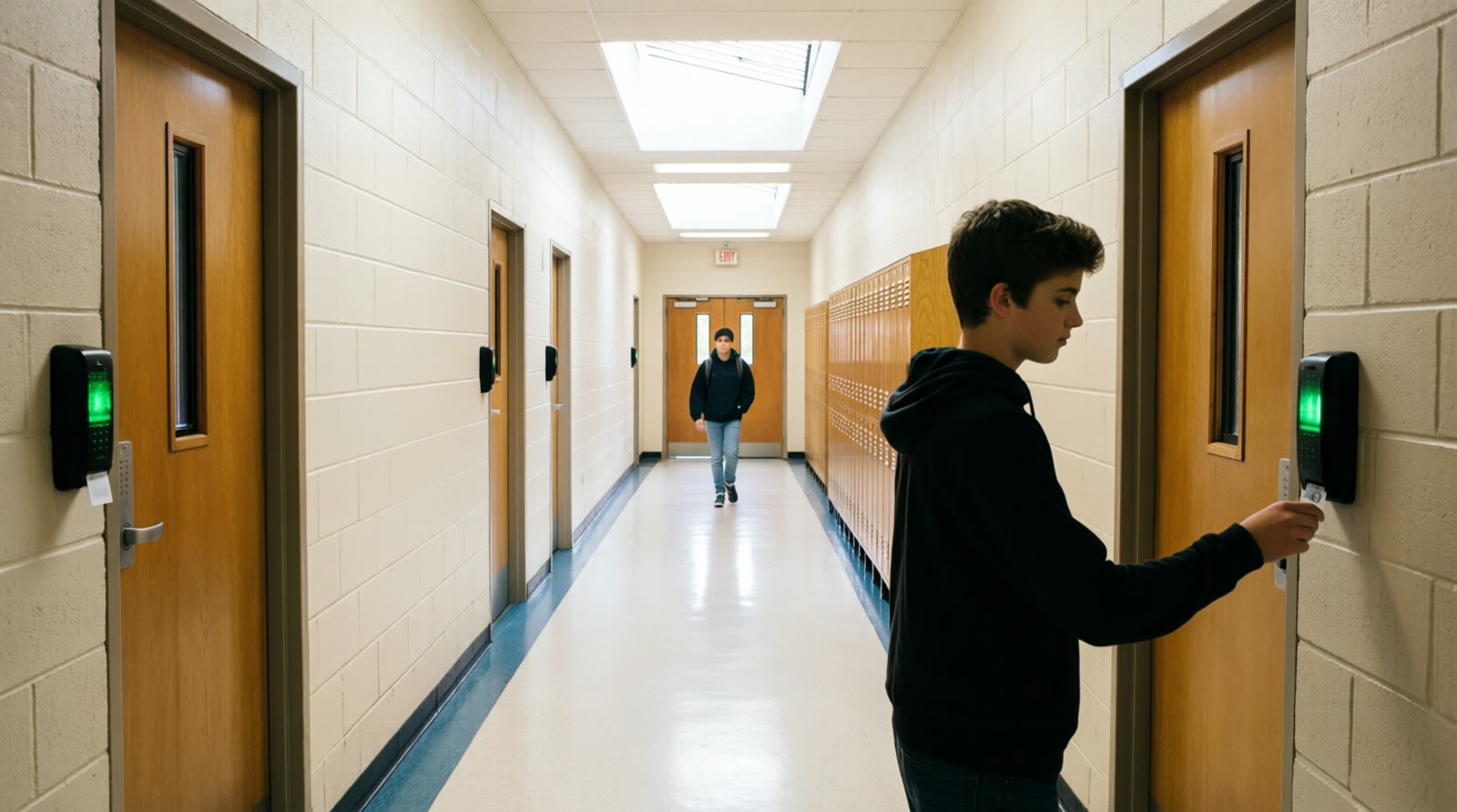
- Ten classroom doors fitted with a reader, fail‑secure electric strike, door sensor and UL 294 listed controller. Your doors, frames and levers stay.
- Schedules and rosters synced from your SIS, so each door opens for the students and staff in that room, that period.
- Lockdown from the office, a phone or a panic‑alert system, with a live view of which doors are closed.
- One hour of staff training and a fire marshal package for the AHJ review.
- A scripted lockdown drill and a door‑by‑door report within seven days of it.
What it costs
≈ $28,000
Year‑one planning figure for ten existing doors, before grants: about $24,900 in hardware and installation at the midpoint (including a 12% contingency) plus $3,250 for the Campus Lockdown license. Depending on door type and cabling the installed cost runs from about $18,500 to $38,000.
Your contractor quotes and bills the hardware and labor after a site survey. ClassLock bills the license. The estimator shows how the numbers are built.
How long it takes
- Week 1: site survey of the ten doors, network path check, SIS export agreed.
- Weeks 2–3: hardware ordered; contractor schedules the install for a weekend or break.
- Install: two to four days on site for ten doors.
- Commissioning: one day. Schedules load, every door is tested with real badges.
- Drill: within two weeks of go‑live. Report seven days later.
What the drill proves
The report your board has never seen before
Most lockdown drills end with "it went fine." A ClassLock drill ends with a line per door. This is an illustrative sample of the report format; pilot results will be published here as districts allow.
| Door | Locked when the drill began | Seconds to confirmed secure | Door closed at the sensor | Propped‑door events, prior 30 days | Denied entries, prior 30 days |
|---|---|---|---|---|---|
| B101 | Yes | 0 | Yes | 0 | 3 |
| B102 | Yes | 0 | Yes | 2 | 1 |
| B103 | Yes | 0 | No, held open 41 s | 7 | 0 |
| B104 | Yes | 0 | Yes | 0 | 5 |
| B105–B110 | Yes | 0 | Yes | 1 | 4 |
Sample values, not pilot data. The point of the report is the row that is not green: B103 is the door that gets propped, and now the school knows it.
Door status, not opinions
The door sensor and the strike report what happened. Nobody has to remember whether the door was locked.
Propped doors by name
Thirty days of sensor data shows which doors get wedged open and when. That is the compliance gap the investigations keep finding, measured.
Denied entries
Every tap by a badge that did not belong in that room at that time is logged. It is the first measure any school has had of how often the hallway tries the door.
What we need from you
Five things, all of them small
- Ten doors in one wing or corridor, ideally a mix of inward‑ and outward‑swinging doors so the pilot proves both.
- A roster and schedule export from your SIS, or a OneRoster connection. Read‑only.
- A network port per door, or a path to run one. Power over Ethernet from a switch on your security VLAN.
- A fire marshal contact. We supply the package; the AHJ signs off per door.
- A drill date within two weeks of go‑live.
After the pilot
Expand, pause, or stop
The pilot hardware is yours. If the drill report earns the next wing, the same contractor adds doors in batches of twenty or more and the license steps down to $300 per door at 25 doors. If it does not, the ten doors keep working on the license you already have, and we will tell you plainly what we learned.
Pilot districts choose whether their results are published named or anonymised. Either way, the first drill reports will be posted on this page.
Phased rollout costs are charted on the Compare page.
Pick the wing. We will scope the ten doors.
Send a floor plan or a door count and we return a pilot proposal, a contractor in your area and a grant brief for your state.